How much does it cost to heat the house with a heat pump in winter?
Knowing how much it costs to heat the house with a heat pump over an entire winter depends mainly on four factors: the insulation of the house, the temperature you decide to keep inside, the efficiency of the equipment chosen and the price of the contracted electricity. There is no single value valid for all houses, but a well-sized heat pump tends to use much less electricity than heating with only electric resistance, because it takes energy from the outside air instead of producing it all from the current.
Therefore, the right question is not "how much does a heat pump cost", but "how much will it cost to heat this specific house, with this equipment and this habit of comfort". It is this analysis that changes the final result, and it is also this that changes from house to house.
How does a heat pump work to heat the whole house?
An aerothermal heat pump takes energy from the outside air, even on cold days, and transfers it into the house through a circuit with refrigerant. A compressor raises the temperature of this heat, which is then delivered to the water in the heating system (underfloor heating, radiators or fan coils) or directly to the indoor air, depending on the type of installation.
The essential difference with a boiler or an electric heater is that the heat pump does not produce heat from scratch: it takes it from the environment and concentrates it. This is the reason why it usually needs less electricity than heating only the resistance to deliver the same amount of heat.
What factors make the heating bill go up or down?
Before comparing systems, it is worth realizing what really weighs on an entire winter's bill:
- Insulation of the house: poorly insulated walls, roofs and frames force the system to work longer to maintain the same temperature.
- Comfort temperature chosen: Keeping the home a little cooler in little-used rooms makes a difference over the course of an entire season.
- Type of heat emitter: Underfloor heating works with water at lower temperatures than traditional radiators, which usually requires less effort from the heat pump.
- Correct equipment sizing: a poorly sized heat pump, too small or too big for the house, never works at its ideal point.
- Tariff and opening hours: the price of the contracted electricity and the time of day when the system works the most influence the total paid.
- Regular maintenance: clean filters and purged hydraulic circuitry keep equipment running as designed.
Does the heat pump heat up well on the coldest days in Portugal?
Yes. Current aerothermal equipment is prepared to continue to remove heat from the air even at temperatures close to zero degrees, although efficiency drops slightly the colder it is outside. In most of the Portuguese territory, including the north and the interior, winters do not reach values that prevent the equipment from operating with good performance.
The important point is sizing: a technician must calculate the actual thermal load of the house, taking into account the climatic zone, to choose an equipment power that can withstand even the coldest nights, without being undersized.
Heat pump, gas boiler or direct electric heating: which weighs less on the bill?
| Criteria | Heat pump | Gas boiler | Direct electric heating |
|---|---|---|---|
| How it produces heat | Draws energy from outside air | Burning natural gas or propane | Transforms electricity into heat by resistance |
| Consumption in relation to the heat delivered | Delivers more heat than the electricity it consumes | It depends on the price of gas and the boiler yield | It consumes as much electricity as the heat it produces |
| On-site emissions | None (no combustion) | Yes, resulting from combustion | None (no combustion) |
| Pairs well with solar PV | Yes, it reduces the cost of the electricity it consumes | Not applicable | Yes, but with less efficiency gain |
| Typical maintenance | Annual circuit and filter review | Annual review required by law | Practically none |
There are no savings values that work for all homes, because they depend on the price of energy in each contract and the habits of each family. Still, the principle remains: a well-sized heat pump tends to require less electricity than a heating unit only the resistance to keep the house at the same temperature.
Real case: heating a house in Guimarães with a heat pump and underfloor heating
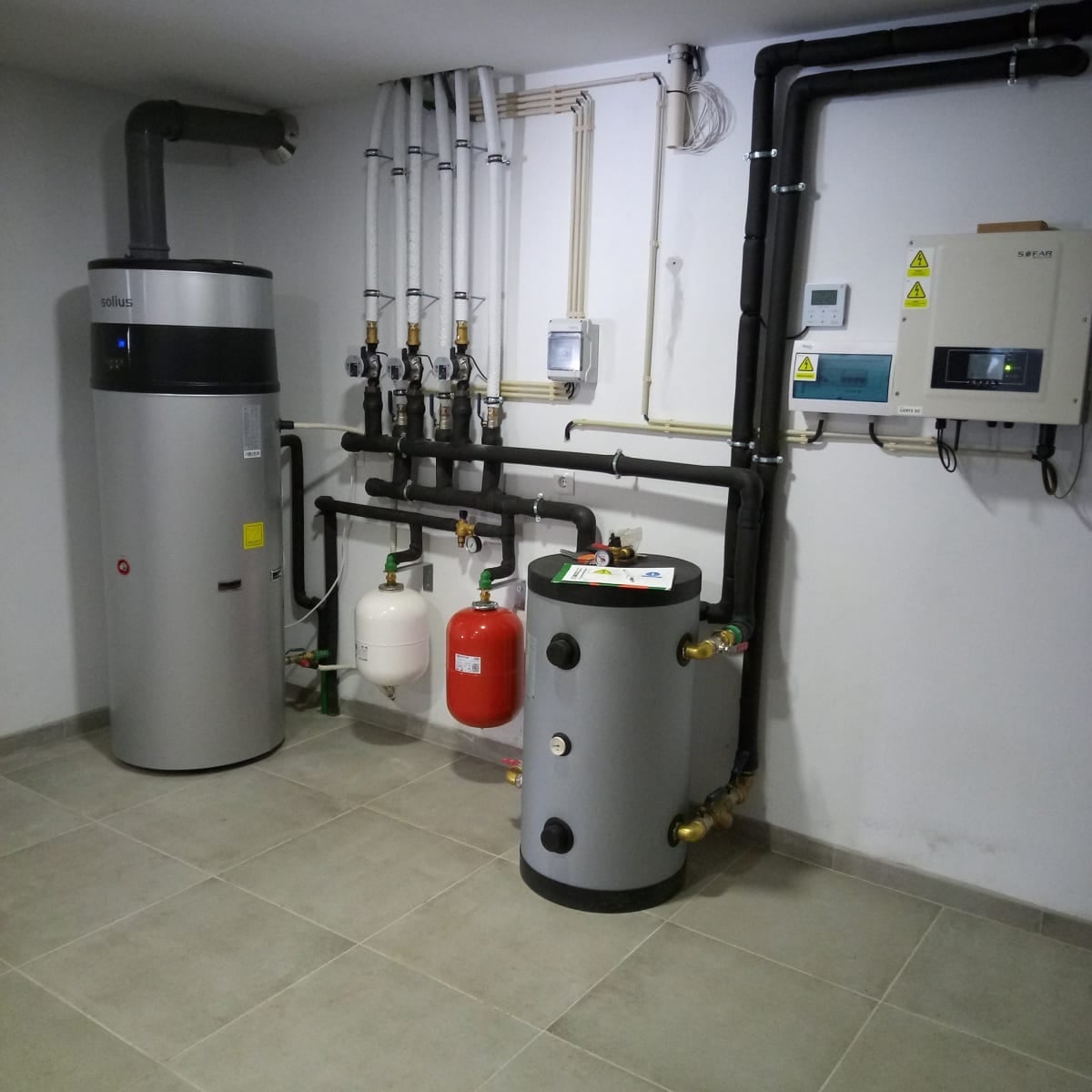
In a recent LEFE project, for a house in Ronfe, Guimarães, we proposed a comprehensive air conditioning solution: underfloor heating throughout the area of the house, powered by a 12 kW Solius Aerobox Inverter R290 aerothermal heat pump, with mechanical ventilation with heat recovery and centralized management through Solius Manager.
This combination (underfloor heating plus aerothermal heat pump) is common in new homes or in deep renovations, precisely because underfloor heating works well with the lower water temperatures that the heat pump can efficiently produce. The customer, whose data we keep anonymous, opted for a system designed for the entire heating season, and not just for the coldest days.
How to further reduce the cost of heating the house in winter?
- It maintains a reasonable comfort temperature instead of excessive, because each extra degree costs more throughout the season.
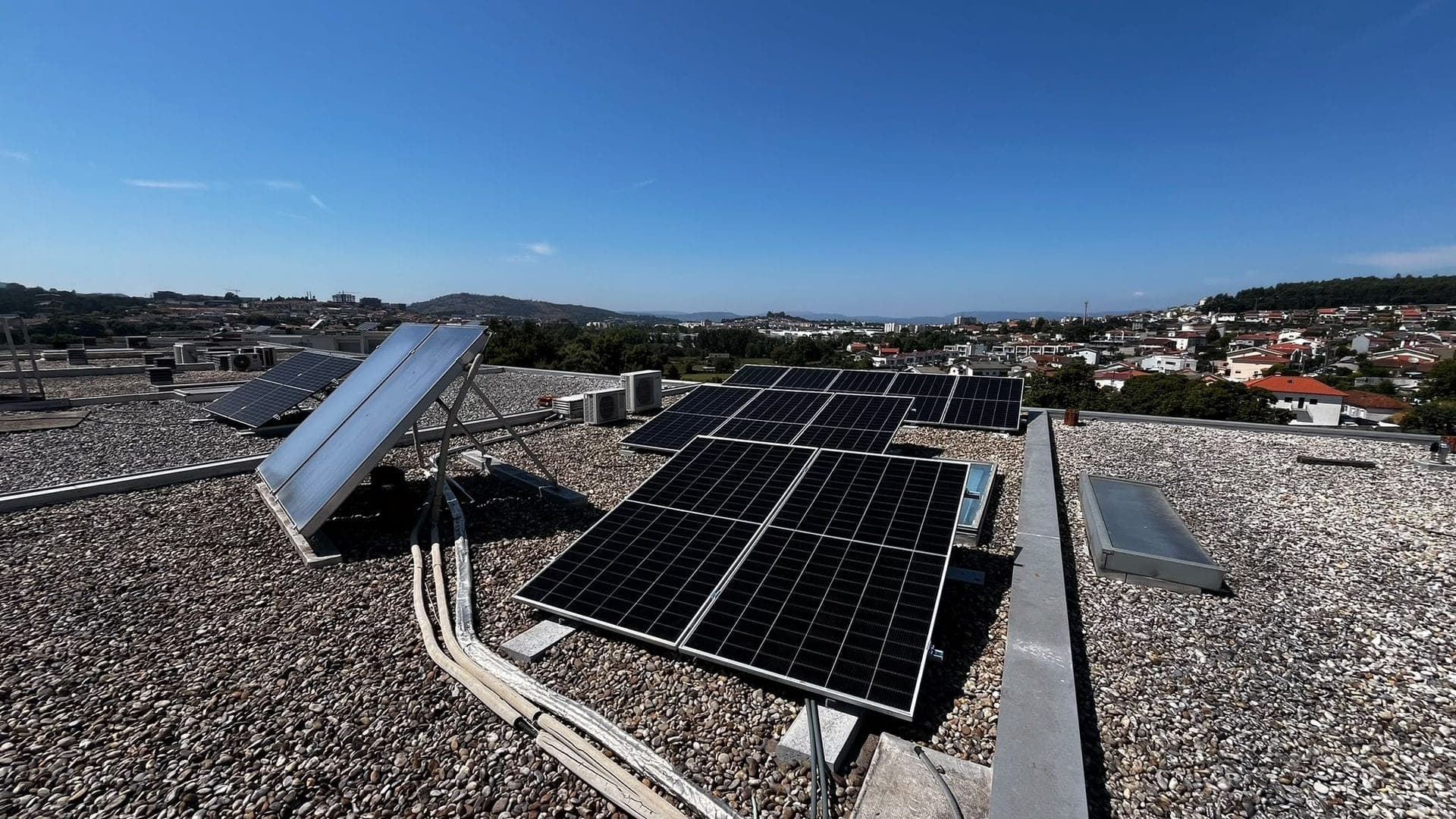
- It combines the heat pump with solar panels, so that part of the electricity it consumes comes from the production of the house itself.
- It reinforces the insulation of windows and doors, even with simple measures, before thinking about changing equipment.
- You program the thermostat by room and by time, instead of heating the house all day in the same way.
- It marks the annual maintenance of the equipment, so that it continues to operate at its most efficient point.
Every home has a different combination of these factors, which is why a personalised simulation is always worth more than any generic value. The LEFE team calculates the real thermal load of your home, evaluates the existing heating system and proposes the most suitable equipment for your case, without obligation.
Talk to LEFE and understand what changes, in particular, in your home.