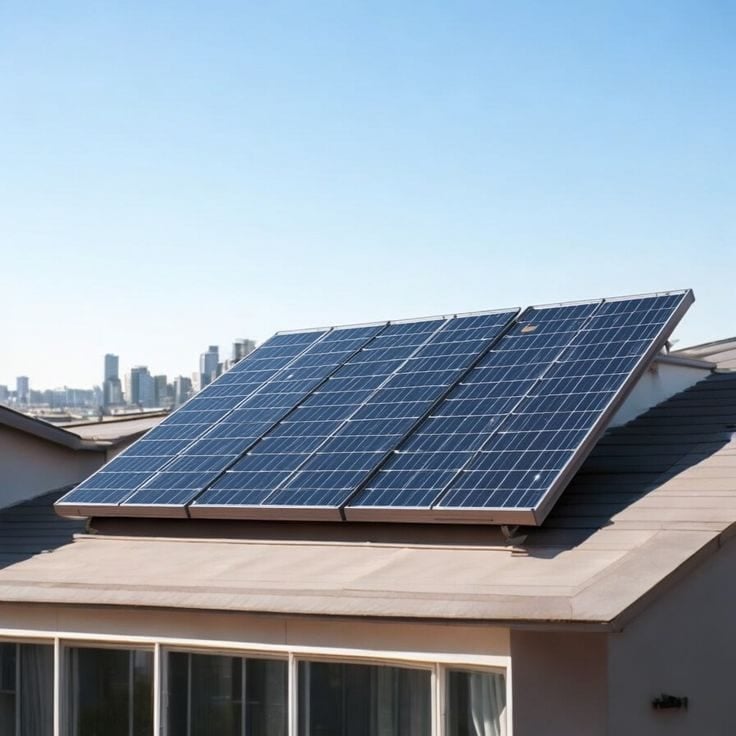
In July 2026, solar power was the largest source of electricity in Portugal for the first time (19%). Check out the data from REN and see what this means for your bill.
It happened for the first time in history: in July 2026, solar power was the leading source of electricity generation in Portugal. It wasn’t hydropower, it wasn’t wind power, it was the sun. According to data from REN (Redes Energéticas Nacionais), solar power alone accounted for 19% of the entire electricity grid’s supply that month. This milestone confirms what we experience every day on the ground: the country is, quite literally, turning toward the sun. And that has direct implications for your bill, at home and at work.
In summary:
According to REN, July 2026 ended with solar power leading national electricity production. The breakdown by source was as follows:
All told, renewable production covered 53% of July’s consumption. Natural gas accounted for 13%, and imports for 34%. In other words: more than half of the electricity the country consumed that month came from clean sources, and solar accounted for the largest share.
The fact that solar power has surpassed hydroelectric and wind power is no coincidence: it’s the result of years of rapid growth in installed capacity, both at large power plants and on the roofs of homes and businesses. And July’s figure is not an isolated case, looking at the cumulative total from January through July 2026, renewables already account for 68% of national consumption (hydro 27%, wind 24%, solar 12%, and biomass 5%), with natural gas at 14% and imports at 18%.
In other words: Portugal is becoming less and less dependent on fossil fuels and electricity purchased from abroad, and increasingly reliant on resources we have in abundance, starting with the sun. For those making energy decisions at home or in business, this is the clearest possible sign that solar self-consumption is no longer just a “trend” but has become the norm.
This national record has a direct impact on your bill. If the entire country is generating energy more cheaply using the sun, those who produce their own energy benefit from exactly the same principle, on a rooftop scale. In practice:
The good news is that joining this transition has never been more accessible. A properly sized photovoltaic system, neither too large nor too small, pays for itself in just a few years and continues to generate power for decades. And if you live in an apartment without your own roof, or have a system that produces more than you consume, energy communities let you share (or receive) solar energy without installing anything.
The key, as always, lies in proper sizing and a well-executed installation. That’s where LEFE comes in: we analyze your actual energy consumption, your roof, and your budget, and present a customized proposal, so your home or business can keep pace with the country’s energy transition, instead of paying the price on the wrong side of the equation.
The fact that solar power is leading electricity production in Portugal is more than just a nice statistic: it’s confirmation that solar energy is now at the heart of the system, not just an add-on. For those who already have solar panels, it’s proof that they made the right choice. For those still considering it, now is the best time to take the plunge, with the entire country leading the way.
Data source: REN: Redes Energéticas Nacionais, “Solar Was the Leading Source of Electricity Generation for the First Time in Portugal” (July 2026).
Want to get your roof generating power while the sun leads the way? 👇
The LEFE team will analyze your energy usage and your roof and provide you with a customized proposal, with no obligation.
Leave your comment: just your name.
No comments yet. Be the first!