
 Installed by LEFE
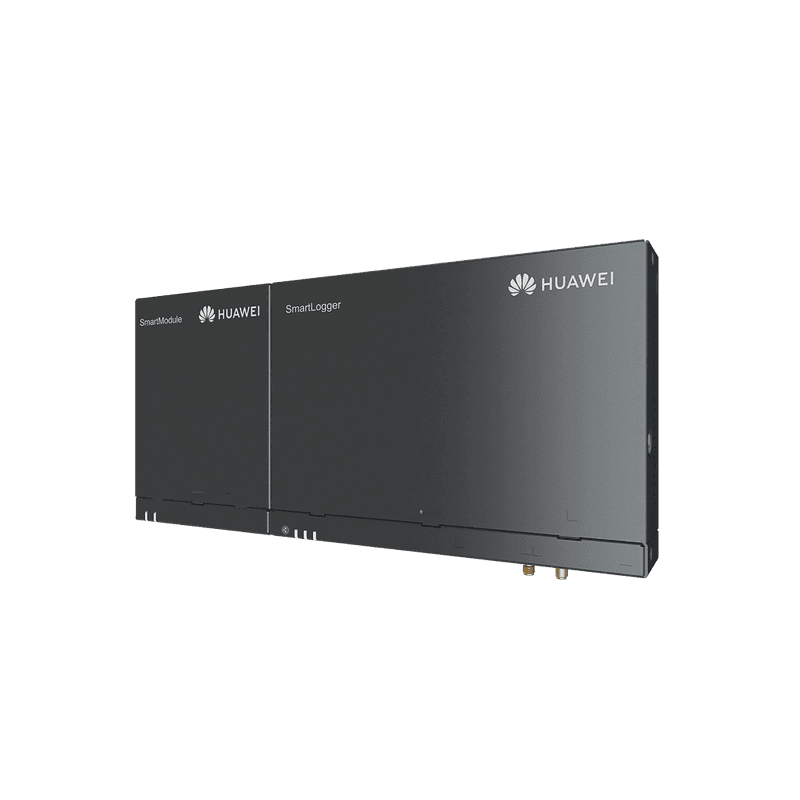
Ref. SmartLogger3000
The brain of a commercial facility: collects data from all inverters, meters, and sensors, and controls injection into the grid.
What stands out
How it works
O que este equipamento faz de diferente, e o que isso significa no dia a dia.
I-V curves and string monitoring: a panel rendering barely appears on the screen, not on an invoice at the end of the quarter.
AFCI with fast cut, which in an industrial coverage is an insurance company requirement and not an extra.
Control of the power injected into the network, peak cutting and integration with the building management system.
Remote diagnostics and updates by FusionSolar, without traveling.
Dados do fabricante
The brain of a commercial facility: collects the data from all the inverters, meters, and sensors, and controls the injection into the grid. In a multi-inverter facility, someone has to speak for everyone—gather the data, enforce grid limits, and send it all to the platform.
In a multi-inverter installation, someone has to speak for everyone – gather the data, enforce grid limits, and send everything to the platform.
The SmartLogger 3000 does this: it connects to the inverters, the meter and the weather station, applies the power control required by the license, and it is through it that the remote monitoring and maintenance of the entire installation passes.
Huawei is the world's largest manufacturer of photovoltaic inverters and brings to solar energy what it has been doing for thirty years in telecommunications: power electronics and software. In practice, this is what explains the difference - the installation is managed by the FusionSolar application, the inverter detects a panel producing less before anyone notices, and the arc flash protection (AFCI) cuts in milliseconds, which on a roof is a matter of safety and not a brochure.
LEFE installs, connects to the network and takes care of after-sales in the North and Center of Portugal. We are our own team, we make technical visits before budgeting and we take care of UPAC installation communications. Ask for a quote: the answer takes the numbers of your case.
Official Huawei product, installed and covered by LEFE.A photovoltaic self-consumption system is sized by its actual consumption and by the usage profile throughout the day. Not by averages. The goal is to produce the energy you spend during the day and maximize self-consumption; batteries allow you to save the surplus for the night.
Key components: panels (power and efficiency), inverter (single-phase or three-phase, with suitable MPPTs) and, optionally, batteries and an electric vehicle charger. LEFE does the study with your consumption, takes care of licensing and grid connection.
Questions
Alternatives
Ask for a free quote with installation included - our team will advise the best solution for your case.


