What is aerothermal energy, how does an aerothermal heat pump work and when it pays to change the gas boiler or the electric water heater, with real cases of LEFE.
Have you ever heard of aerothermal, but still don't quite understand what it is? You're not alone. It's one of the most used (and least explained) words when it comes to heating or cooling a house efficiently. In five minutes of reading you get to know what it is, how it works and in what situations it really pays to change the current system for an aerothermal heat pump.
In summary:
Aerothermal energy is a technology that takes advantage of the thermal energy present in the outside air, even on cold days, and transfers it into the house through a heat pump. It is not combustion, there is no flame or gas burning; it is a physical process of heat transfer, similar to what happens (in reverse) inside a refrigerator.
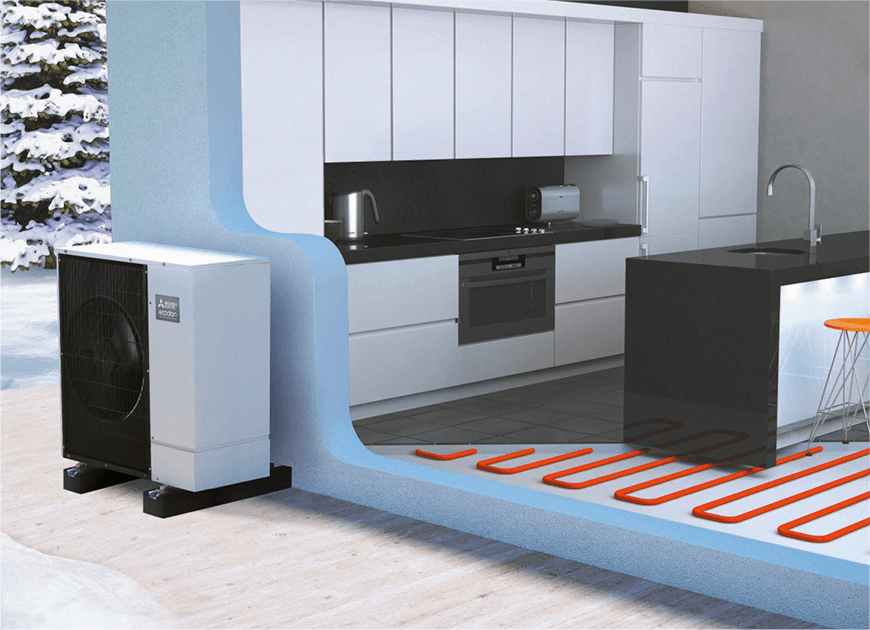
The word technique is more frightening than it should. In practice, the equipment is an outdoor unit (similar to that of an air conditioner, but larger) connected to a hydraulic system or to indoor units, depending on the use: heating by radiators, underfloor heating, fan coils or simply hot water for baths.
The number that sums up this efficiency is called COP (coefficient of performance). A COP of 3.9, for example, means that for every kWh of electricity consumed, the equipment delivers 3.9 kWh of useful heat. Compared to a normal electric water heater (COP close to 1) or a gas boiler, the difference is already noticeable on the bill.
We usually divide aerothermal energy into three uses, which can even coexist in the same system:
A real example: we recently installed a 10 kW Aerobox heat pump in a house in the Braga area, dedicated to heating a 151 m² house by underfloor heating. The design started from an estimated thermal load of 65 W per square meter, typical of a well-insulated house; the system was ready to completely replace the need for a conventional boiler in this circuit.
Not only in private homes. In a nursing home in the Vila das Aves area, LEFE proposed the complete replacement of the gas boiler system with high-temperature air-to-water heat pumps, in a cascade of three units of 32 kW each (96 kW in total), with natural refrigerant R290.
The interesting point of this case is that the solution was designed to take advantage of the hydraulic circuit and radiators already in the building, already prepared for high-temperature water. The chosen system reaches up to 70°C, enough to keep these radiators operating without changes, completely eliminating gas combustion on site. For an institution with constant needs for hot water and heating, the reduction in operating costs and emissions throughout the year tends to be considerable.
| Criteria | Aerothermal energy | Gas boiler | Electric water heater |
|---|---|---|---|
| Efficiency (per 1 kWh consumed) | Up to 3.9 kWh of heat | ~0.9 kWh heat | ~1 kWh heat |
| Fuel | Electricity + outside air | Natural gas or propane | Electricity |
| Local emissions | None (no combustion) | CO₂ and other gases | None (no combustion) |
| Compatible with solar PV | Yes, it reduces the cost even more | Not applicable | Yes, but low efficiency |
| Initial investment | Medium to high | Low to medium | Low |
The simple conclusion: those who already have gas and the system is working well, can wait for the end of the boiler's useful life to change it. Those who are deciding from scratch, or have an old electric water heater, almost always benefit from aerothermal energy in the medium term, even with a higher initial investment.
Does it work even when cold? Yes. Current equipment is prepared to continue extracting heat from the air at negative temperatures, although efficiency drops a little the colder it is outside. In Portugal, even in the harshest winter areas, performance remains clearly advantageous compared to an electrical resistance.
Does it make a lot of noise? The outdoor unit produces some noise, similar to that of an air conditioner, but the latest models come with silent night modes. It is worth choosing the installation location well, so as not to be right next to a room.
Do I need to change radiators? Not always. High-temperature systems, such as the nursing home example mentioned above, can power traditional radiators without major changes. On underfloor heating, which works at lower temperatures, the efficiency is even greater.
Is there support to change the system? Throughout the year, energy efficiency support lines regularly appear, including the replacement of old heating systems. It is always worth checking the conditions in force before deciding on the date of the work.
It is also worth mentioning that aerothermal energy is not just for heating. In a recent proposal for a private customer in the Vila Nova de Famalicão area, we installed a heat pump dedicated only to the production of domestic hot water, with a 300-liter tank and COP up to 3.9; without touching the house's heating system, just replacing the old electric water heater. It is proof that you can start small and grow later.
Do you want to understand if aerothermal energy makes sense for your home or for your business?
The LEFE team will analyse your case, calculate the actual thermal load and propose the most suitable solution (and equipment), without compromise.
Leave your comment: just your name.
No comments yet. Be the first!