
What weighs the most in the energy class of a house (windows, insulation, heat pump and solar), an anonymized real case and the supports available in Portugal in 2026.
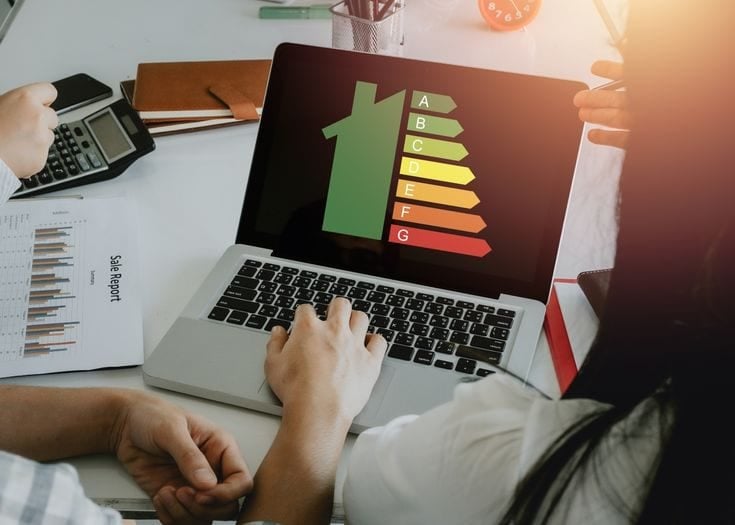
Do you think that your home's energy certificate is just a piece of paper to sell or rent? In practice, it is the x-ray that shows where the property loses energy (and money) and what is the shortest way to spend less on heating, cooling and hot water. In 2026, moving up in energy class also opens the door to support: without a valid certificate, there is no possible application. Let's see what weighs most in the final grade and how to improve it without spending a fortune.
In summary:
The energy certificate is issued by a qualified expert registered with ADENE (Energy Agency) and compares the actual performance of the house with the minimum performance required of a new building. From this comparison comes a class, from A+ (most efficient) to F (less efficient). The better the class, the less energy you need to spend to keep the house comfortable throughout the year; and, increasingly, it is also a requirement to access financing and public support.
The process generally takes between 3 and 10 working days after the technical inspection, and has to be done by a qualified technician; there is no way to "do it at home" or to bypass the inspection.
There is also a practical effect that usually goes unnoticed: a house in class A or B sells and rents faster, and usually at a better price, than a house in class E or F with the same dimensions. Those looking for a house today already ask about the energy class before booking the visit, especially because they know that it will weigh on the electricity and gas bill in the first few years.
Not all works weigh in the same way in the energy certificate. In order of typical impact:
It doesn't always make sense to attack all four fronts at the same time. If the budget is limited, it usually pays more to start with what has the lowest cost for each point gained in the class: usually the windows and the technical system, leaving the insulation from the outside (more expensive and more time-consuming) for a second phase, or for when there is façade work planned in any way.
A real example (anonymized data): a 3-bedroom villa in the district of Braga, with about 173 m² of floor space. Heating is done with a biomass stove and domestic hot water with an electric heat pump; the walls have thermal insulation from the outside, the roof and floor have insulation from the inside, and the windows already have double glazing with external sun protection.
Result: more than 60% of the energy consumed in the building comes from renewable sources and the associated emissions are around 1.5 tons of CO2 per year, a low value for the typology. There is no "trick" here; it is the sum of good windows, insulation and an efficient technical system for hot water.
In 2026 there is no new open phase of the old Support Program for More Sustainable Buildings; E-LAR (2nd phase) is closed to new applications and the Efficiency Voucher has been closed since October 2024. But the topic remains on the agenda: on December 12, 2025, the Government announced a new financial instrument to support energy efficiency interventions in the residential sector, financed by the RRP and managed by Banco Português de Fomento, in the form of a repayable loan with advantageous conditions, which should cover works such as efficient windows and thermal insulation (source: Idealista).
Whatever program is in place when you decide to move forward, one thing does not change: you need a current energy certificate, issued by an ADENE expert, before applying for any support. It is worth taking care of this first, even if you do not yet know what work you are going to do.
This also means that it's not worth waiting for the "perfect" support to get started. Programs open, close and change names with some regularity, but the energy certificate doesn't lose validity because of it, and a more efficient home saves from the first month, with or without public funding.
| Measure | Typical impact on the class | Type of work |
|---|---|---|
| Thermally cut windows with double glazing | High | Punctual, without major civil construction work |
| Thermal insulation (walls, roof, floor) | High | Visible work, especially from the outside |
| Heat pump (DHW or air conditioning) | Medium to high | Equipment replacement |
| Solar self-consumption | Medium | New installation, without civil construction work |
Moving up in energy class is rarely a one-time job; it's the sum of smaller decisions (windows, insulation, the right heating system, some solar production) that, together, make a difference in the bill and on paper. And as the available supports change with some frequency, the best time to deal with the certificate is before deciding which work to do first.
Have you thought about photovoltaic self-consumption solutions or switching to a more efficient heat pump? It is also worth reviewing energy efficiency support in 2026 before asking for quotes.
Do you want to understand what makes the most sense for your home? The LEFE team helps you understand where it is most worth investing first, whether in air conditioning, insulation or solar.
Leave your comment: just your name.
No comments yet. Be the first!

