Practical guide on air conditioning for offices, shops and other commercial spaces: differences between mono-split, multi-split and VRF, real prices charged by LEFE in 2026 and a real case of a clinic in Braga that reduced from 14 to 4 outdoor units.
September is synonymous with a return to routine, and it is also the time when many companies, offices and shops finally decide to take care of the air conditioning before the cold arrives in earnest. If you still think about air conditioning only for the summer, you are missing the most interesting part: a well-chosen system heats up in the winter, cools down in the summer and can reduce the bill all year round. The question is not "if" you need air conditioning for offices, shops or other commercial spaces. It's which system makes sense for your space. That's what we're going to solve here.
Every year it's the same story: in June and July, requests for air conditioning skyrocket, installation teams fill their schedules and deadlines stretch. Then, in November, when the office is cold and the portable electric heater doesn't arrive, the opposite rush appears, and there is no longer time to calmly compare options. September is in the middle: the heat no longer forces you to make hasty decisions and there is still time to choose well, ask for more than a quote and install before the days get really cold. For those who manage a commercial space, it is also the natural time to review consumption from the past summer and see if the current system is weighing on the electricity bill more than it should.
There is also a practical reason: equipment ordered in September arrives in time to be installed before the cold sets in, which avoids two common things in clinics, offices and shops. Portable electric heaters turned on all day (which skyrocket consumption without solving the comfort of the entire room) and weeks of waiting for an emergency installation in the middle of winter, when technical teams have a full schedule with breakdowns.
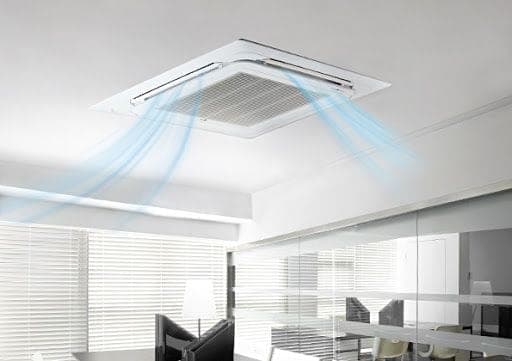
Before asking for a quote, it helps to understand what each solution solves:
In either case, LEFE today recommends equipment with DC Inverter technology (adjusts the power continuously instead of turning it on and off), energy class A++ or A+++ and ecological refrigerant R32. This is what comes out in all the most recent proposals, whether Mitsubishi Electric, Nipon or Solius.
A medical clinic in the Braga area, spread over 4 floors, had an initial air conditioning project that provided for 14 outdoor units, one for each office, waiting room or office. In addition to the visual impact on the façade, this meant more holes, more piping and more maintenance points.
By redesigning the solution with Mitsubishi Electric multi-split systems (MSZ-AY series in indoor units, with MXZ outdoor modules serving multiple cabinets simultaneously), LEFE was able to maintain individual comfort in each space, reception, waiting room, consulting rooms and offices, reducing the number of outdoor units from 14 to just 4, one per floor. Less equipment on the façade, fewer installation and maintenance points, and the same ability to heat and cool each room independently.
The values vary with the area, the number of rooms and the brand chosen, but to give a real reference: for a space with two mono-split units (one per room) and respective installation, LEFE's budgets in 2026 show this range, depending on the brand:
| Brand/range | Power (Heat/Heat) | Energy class | 2 units + installation (incl. VAT) |
|---|---|---|---|
| Nipon VITA | 2.5 to 6.2 kW | A++/A+++ | 560 € to 1.210 € |
| Solius IONIX | 2.6 to 7 kW | A++/A+++ | 560 € to 1.292 € |
| Mitsubishi Electric HR | 2.5 to 7.1 kW | A++/A+++ | 770 € to 2.250 € |
For larger, multi-storey, multi-split or VRF projects, the value per room tends to go down, because part of the installation (main piping, electrical panel, basic labor) is shared between several indoor units. That's why it's worth asking for a project sized to the entire building, instead of adding up budgets room by room.
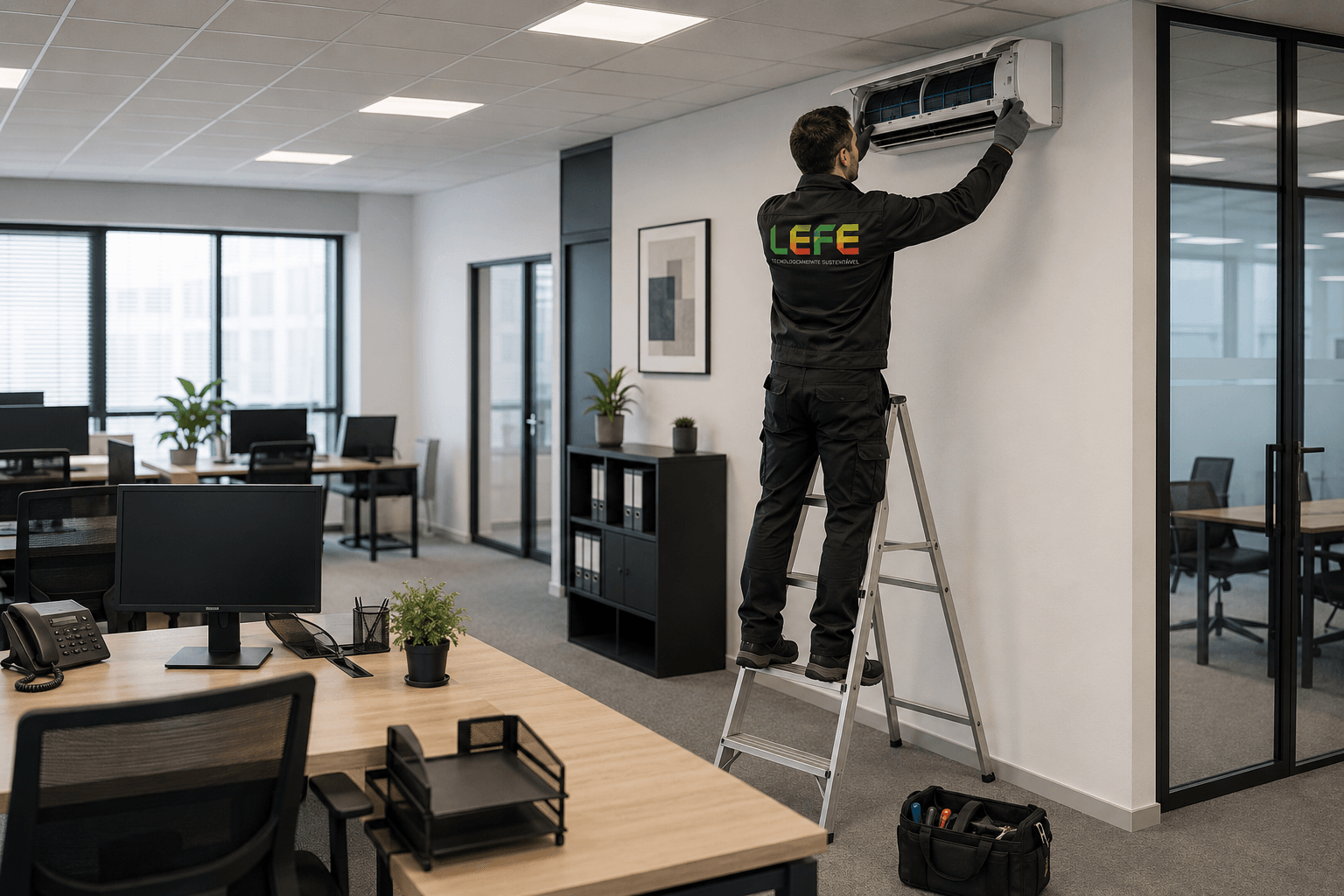
It is also worth talking about maintenance, because it is the part that is most forgotten after installation. A dirty filter or an outdoor unit clogged by leaves and dust make any system, mono-split, multi-split or VRF, consume more to maintain the same temperature. An annual overhaul, done before winter, costs much less than a breakdown in the middle of the cold season and extends the life of the equipment.
The air conditioning of offices and shops is not a decision to postpone until the first day of cold in earnest. Done now, with time to compare mono-split, multi-split or VRF depending on the size of the space, it is possible to reach winter with the system installed, tested and saving on the bill, instead of running after an installer with a full schedule.
Talk to LEFE
LEFE takes care of the air conditioning of offices, shops and commercial buildings throughout the North of Portugal, from sizing to after-sales. Ask for your air conditioning budget here and receive a proposal adjusted to your space.
Leave your comment: just your name.
No comments yet. Be the first!