Closed windows for longer in winter bring a side effect that few families associate with the cold: the quality of indoor air at home worsens, because the air stops renewing itself and concentrates dust, humidity and carbon dioxide inside the rooms. The good news is that you don't have to choose between a warm house and healthy air, you just need to understand how to ventilate and air condition together.
In summary:
- In winter, the indoor air is less renewed because the windows are closed longer.
- Fogged glass, mold in the corners, and allergies that worsen in the home are all signs of poor air quality.
- Ventilating for 5 to 10 minutes, twice a day, renews the air without losing too much heat.
- An air conditioning system with clean filters helps to filter and circulate the air, not just heat.
- LEFE has more than 15 years and 15,000 air conditioning and energy projects in Portugal.
Why does indoor air quality at home worsen in winter?
The quality of indoor air in the home worsens in winter because the windows are closed for longer, which prevents air renewal and concentrates dust, humidity and carbon dioxide inside the rooms. This problem is aggravated if, in addition, the house has poor ventilation and heating systems that dry out the environment too much.
In Portugal, most houses do not have mechanical ventilation and depend on opening windows to change the air. When the cold arrives, this routine disappears and the indoor air circulates less and less. The result is felt in small signs that many families associate with winter, but which actually originate from the air they breathe indoors.
What are the signs of poor indoor air quality?
The most common signs of poor indoor air quality include:
- Smelling air closed or heavy when entering the house from the street.
- Condensation and breath on the window panes, especially in the morning.
- Moisture or mold stains in corners, wardrobes and bathrooms.
- Allergies, coughing or sneezing that worsen indoors and improve outside.
- Feeling dry air, sore throat, or more dehydrated skin near heaters.
None of these signs are cause for isolated alarm, but together they indicate that indoor air needs to be renewed and controlled more carefully, not just heated. It's worth paying special attention to rooms with little air circulation, such as bedrooms with cabinets leaning against the exterior walls or bathrooms without windows, because they are usually the first to show signs of accumulated moisture.
Open windows or mechanical ventilation: what to choose in winter?
Opening windows is still the simplest way to renew the air, but in winter it means losing the accumulated heat in a few minutes. The alternative is controlled mechanical ventilation, a system that exchanges air continuously and discreetly without forcing you to open doors and windows.
In homes that already have an air conditioning system, a good intermediate practice is to ventilate for short periods, between five to ten minutes, twice a day, keeping the house closed and the air circulating through the installed equipment the rest of the time. This routine reduces heat loss and prevents the air from being still throughout the day.
What to do in houses without installed mechanical ventilation
When installing mechanical ventilation is not an immediate option, it is worth checking whether the ventilation grilles in the kitchen and bathrooms are unobstructed, as they are often covered to prevent drafts and end up preventing moisture from escaping.
How does an air conditioning system or heat pump with good filtration help?
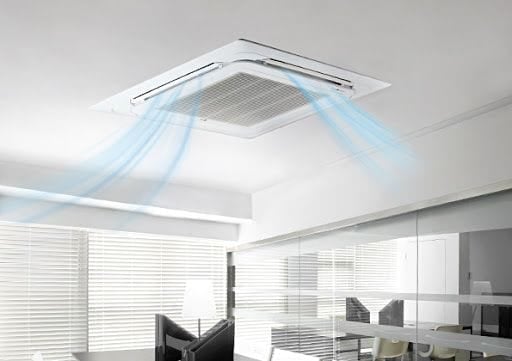
An air conditioning system or heat pump with suitable filters helps because it circulates the air and passes through a filter that traps dust, pollen and other particles before returning the air to the room. This is different from a simple electric heater, which only heats the still air without filtering or renewing it.
Regular maintenance of this equipment, with cleaning of the filters, is what ensures that they continue to filter the air instead of accumulating dust and returning it to the room. Equipment with dirty filters loses effectiveness and can even worsen air quality instead of improving it. Those who are planning to install or replace a system, for example in a house in Guimarães or Braga, can take advantage of this exchange to choose equipment with better filtration, and not just more power.
| Equipment | Heats the air | Renews the air | Filters particles |
|---|---|---|---|
| Single electric heater | Yes | No | No |
| Air conditioner or heat pump with filter | Yes | Partial | Yes |
| Controlled mechanical ventilation | No | Yes | Depends on the model |
How to balance humidity, mold and dry air indoors?
The balance between humidity and dry air is achieved by controlling sources of water vapour, such as hot baths and clothes drying indoors, and ensuring that the air circulates instead of sitting in the same spots. Indoor plants help to create a more pleasant environment, but they do not replace ventilation when there is already accumulated moisture.
In places where there is already mold, cleaning the surface solves the visible aspect, but not the cause. If the problem always reappears in the same place, it is a sign that the air there does not circulate enough and it is worth reviewing the ventilation of that specific room.
Checklist: Air quality at home this winter
- Ventilate for 5 to 10 minutes, morning and evening, even when cold outside.
- Check that the ventilation grilles in the kitchen and bathroom are unobstructed.
- Clean the air conditioner or heat pump filters before the winter peak.
- Avoid drying clothes indoors without running ventilation.
- Record if the mold always reappears in the same place, to show the technician on a visit.
When is it worth calling an HVAC professional?
It's worth calling an HVAC professional when signs of poor air quality persist even after regular ventilation, when mold always reappears in the same place, or when you're planning to change or install a heating system and want it to contribute to healthier air as well, not just temperature.
An on-site assessment allows you to understand if the problem is in the ventilation, the insulation of the house or the installed equipment, and propose an adjusted solution instead of individual purchases that do not always solve the cause. In older homes, it is common for the problem to be in a combination of the three factors, and therefore the solution rarely involves a single new device.
The LEFE team has been monitoring this type of assessment in homes and commercial spaces for more than 15 years and more than 15,000 energy and air conditioning projects in Portugal, through its air conditioning services, helping to choose between air conditioning, mechanical ventilation or a combination of the two solutions according to each situation.
Do you feel that the air at home gets worse in winter? Talk to LEFE and schedule a free assessment of the air conditioning of your home or business.