Do solar panels produce energy in winter?
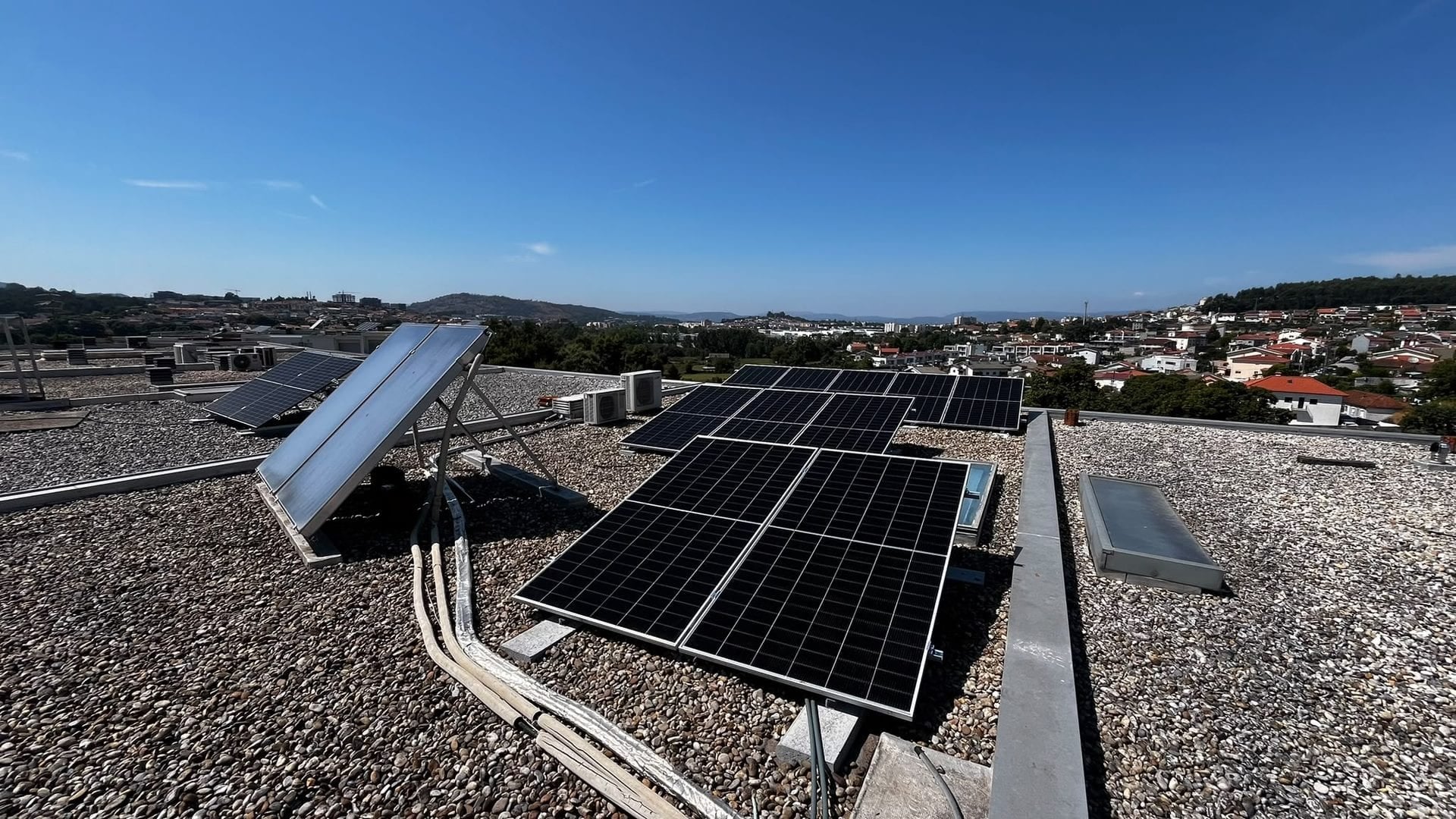
Yes, solar panels in winter continue to produce electricity every day. Production is lower than in summer, because the days are shorter and the sun shines at a lower angle, but the installation does not stop generating energy just because the cold, rain or a cloudy sky arrives.
In Portugal, even in the coldest months, there are usually several hours of direct or diffuse sunshine per day, enough to keep production at useful levels, especially in the middle of the day. The difference between summer and winter is mainly in the number of hours of sunshine and the intensity of the radiation, not in the ability of the panels to operate in the cold.
Why is solar production lower in the winter months?
There are three factors to weigh at this time of year. First, the days are shorter, which reduces the hours when sunlight is available. Second, the sun rises lower on the horizon, so the light passes through more atmosphere before reaching the panels and loses intensity along the way. Third, winter brings more days of cloudy or rainy skies, which reduces direct radiation, even though the panels continue to capture diffuse light through the clouds.
None of these factors are unique to Portugal, it happens in any solar installation in the northern hemisphere. The difference is that the country generally has more hours of sunshine in winter than most countries in Europe, which helps to smooth out the seasonal drop.
The latest data confirm that the sun continues to count outside the summer. According to REN, solar plants ensured 13% of electricity consumption in Portugal between January and October 2026, with a growth of 10% compared to the same period of the previous year. In October, the solar capability index stood at 1.05, above the historical average.
| Factor | Summer | Winter |
|---|---|---|
| Daylight hours | Longest | Shorter |
| Sun angle | Higher in the sky | Lower on the horizon |
| Cloudy sky days | Less frequent | Most common |
| Cell performance in the face of cold | Can go down in extreme heat | Tends to remain the same or improve slightly |
Do cold and rain harm solar panels?
No. Contrary to what many people think, the cold does not damage the panels or reduce their performance. On the contrary, photovoltaic cells tend to work more efficiently at lower temperatures than with the intense heat of summer, because excess heat slightly reduces the voltage generated. Rain is not a problem either, it even helps to wash away the dust and pollen accumulated on the surface of the panels.
The situation that actually reduces production significantly is the shadow: from fallen leaves in autumn, from persistent clouds or, in the coldest areas of the country, such as Serra da Estrela, from a layer of snow on the panels. Other than that, a well-made installation continues to work throughout the winter.
How to prepare solar panels in winter to produce as much as possible?
Some simple practices help to make the most of the hours of sunshine available at this time:
- Check that there are no leaves, branches or dirt accumulated on the panels, especially after autumn storms.
- Confirm that there are no new shadows, from trees or neighboring buildings, that did not exist before.
- Reviewing the orientation and inclination of the installation: panels with a steeper slope make better use of the low winter sun.
- Carry out preventive maintenance on the system, especially the inverter, before the colder season.
Those who are planning a new installation can also consider solar batteries to store the energy produced during the day and use it during the hours when production is lower, such as winter afternoons.
Is it worth having a solar battery for winter days?
With fewer hours of production, saving energy becomes more relevant in winter than in summer. A battery allows you to accumulate the electricity generated in the middle of the day, when there is more sunshine, and use it in the late afternoon and evening, when consumption at home usually rises, for example with heating or lighting. On very cloudy days, the battery also serves as a backup to reduce dependence on the electricity grid during peak consumption hours.
It is not a mandatory solution, but if the solar installation is already sized close to the limit of the house's consumption, a battery helps to make the most of the energy produced in this season of the year as well. Those who are evaluating this option should take into account the consumption pattern of the house at the end of the day, and not just solar production, to understand if the chosen storage capacity makes sense for the winter and the rest of the year.
How do you know if the facility is producing what it should this winter?
The simplest way is to track production through the system monitoring application, such as Huawei FusionSolar, which shows in real time how much each installation is generating and allows you to compare it with previous days.
A drop in production far above what would be expected for the season, for example several days in a row with almost no production with clear skies, can be a sign of a dirty panel, a new shadow or a fault in the inverter that is worth checking. Comparing the current winter with the previous winter, in the same application, also helps to understand if the break is normal for the season or if there is something to correct in the installation.
To have an independent reference of what is normal in each month, you can use PVGIS, the free tool of the European Commission's Joint Research Centre that estimates solar production, month by month, for any location in the country.
Anyone who has doubts about the behavior of their installation, or is thinking of moving forward with a solar energy solution in the Braga area or in another area of the country, can always ask for a technical inspection to understand what is normal at this time of year and what may be going wrong.
Sources
- REN: Renewables supply 62% of electricity consumption after 10 months (03/11/2026)
- European Commission (JRC): PVGIS, solar production estimation tool
For an evaluation of the existing installation or a quote for a new system, see LEFE's services or contact the team directly at https://www.lefe.pt/contacto.