Solar Panel Payback: How Long Does It Take to Recoup Your Investment?
Payback is the time until savings pay for the investment in solar panels. We explain what influences it and show, with the real case of Caparosa, how LEFE calculates it with official data, without brochure numbers.
The question that everyone asks before installing solar panels: "how long does it take to recoup the investment?" The answer is called payback. And this is where you separate those who want to sell you a pretty number from those who want to give you the truth.
✅ In summary Payback is the time until the savings on the bill equal the investment. There is no single number. It depends on each company. That is why LEFE always calculates it with official data: its actual consumption (E-Redes) and the tariffs in force.
3.3 years
Real Payback · Caparosa case
72,3%
Self-consumption
184.751
kWh/year of clean energy
What is payback
It is the time until the system "pays for itself". The formula is simple:
Payback = Total Investment ÷ Annual Savings
The rigour is in the two values: the investment has to include everything (equipment, structure, manpower, design, safety) and the savings depend above all on self-consumption. How much energy you use at the time you produce it.
The "beautiful" payback that many companies show
Most of the proposals it receives bring an attractive payback. Made to win the sale, not to portray reality. They use optimistic averages, assume unrealistic self-consumption and count on the sale of surplus to "close" the accounts.
⚠️ The problem Once you sign, there is no turning back. The system is installed, but the promised numbers may never be confirmed, and the savings you expected do not appear.
How LEFE does it differently
We are not here to deceive anyone. Our process is the opposite of the "leaflet number":
1
We listen to your expectations
We talk to you and understand what you are looking for.
2
We analyze official data
Actual consumption of E-Redes and tariffs in force. Not averages.
3
We delivered a payback close to reality
A number you can trust, and that the installation confirms.
More than our word, they are the examples we present every day. See a real 👇 case
A real case: Caparosa
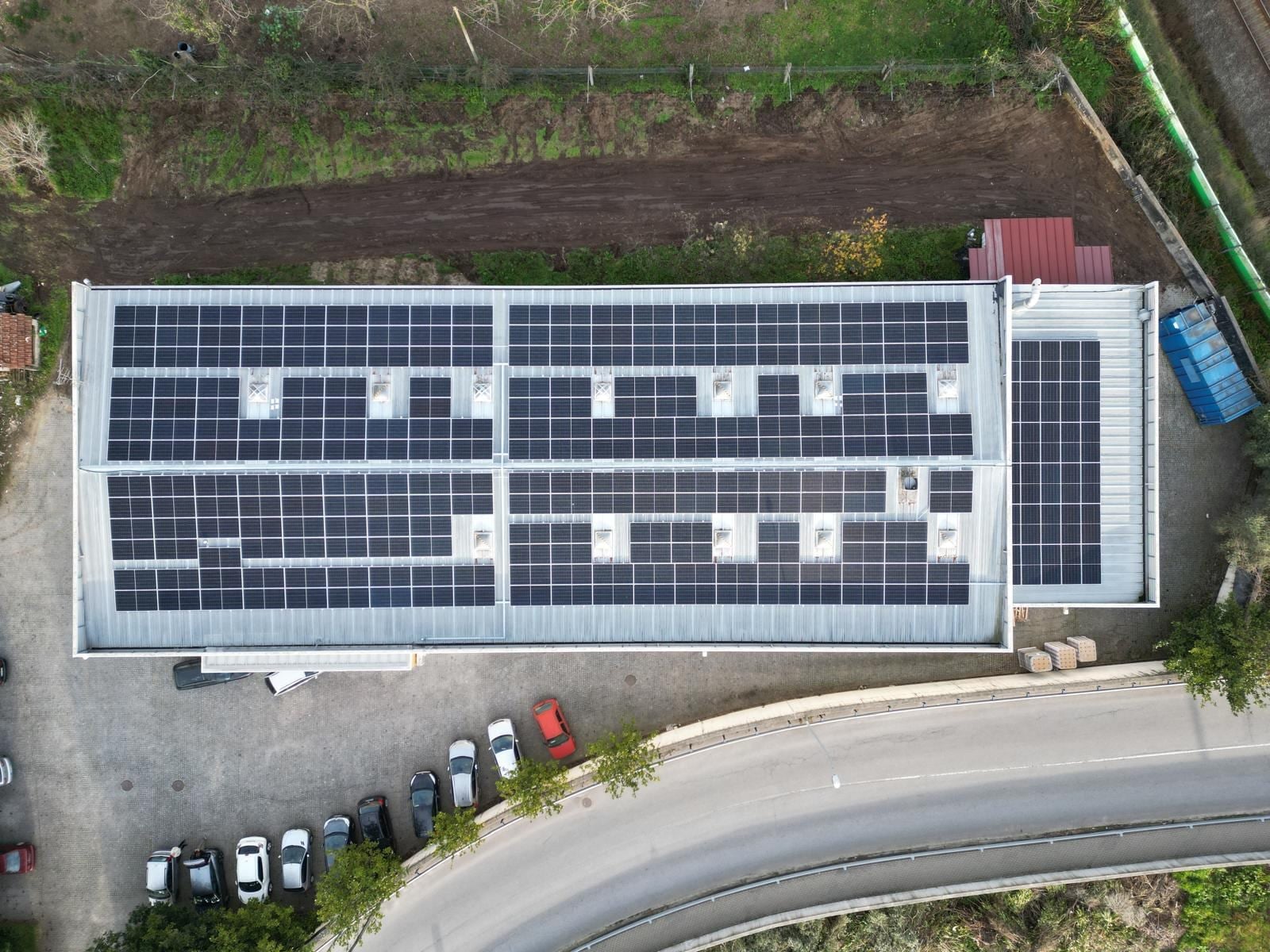
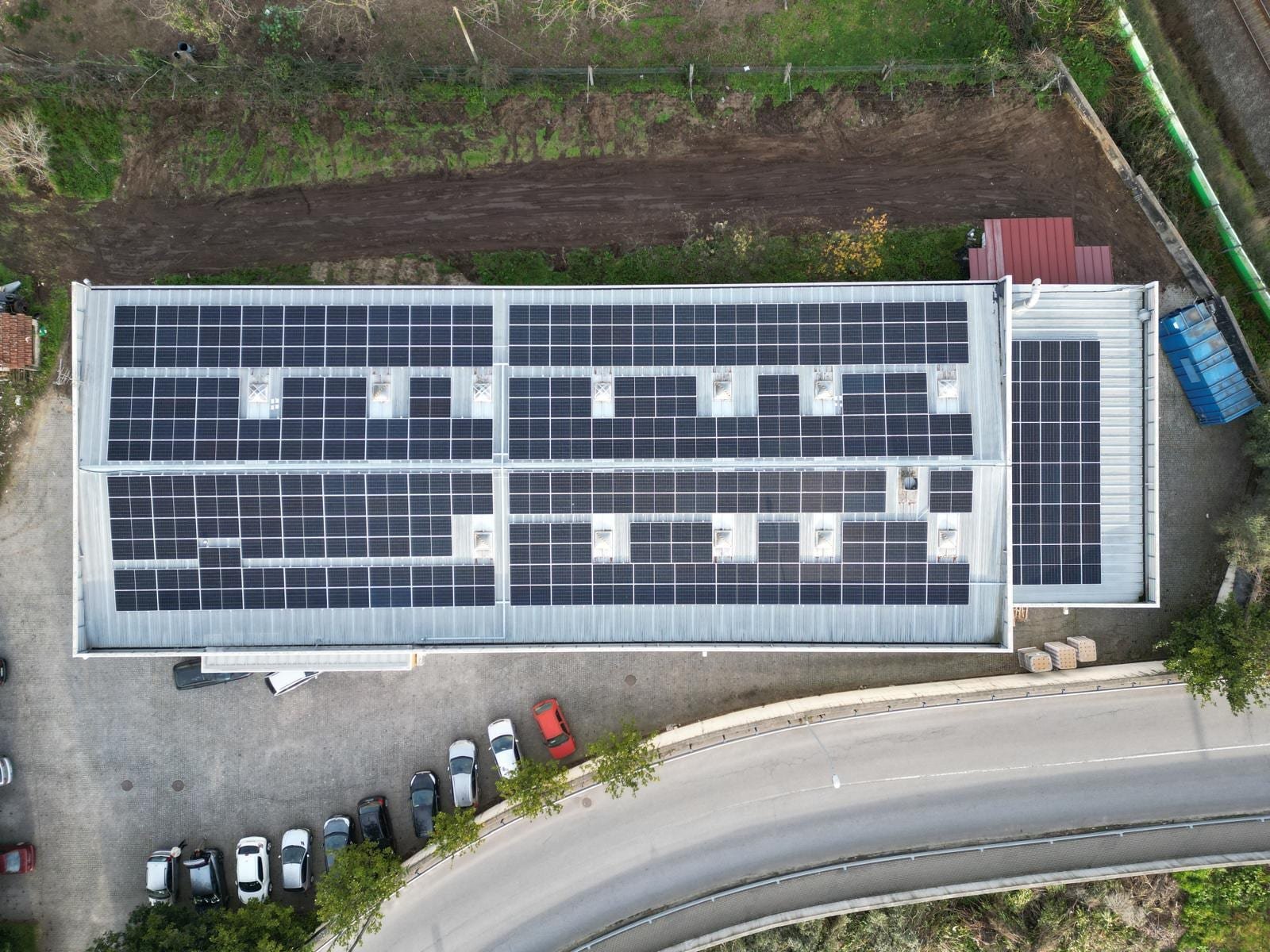
Caparosa: Indústria de Meias, in Vila Nova de Famalicão, asked us for a self-consumption solution. These are the official numbers of the proposal we delivered.
LEFE's photovoltaic system on the roof of Caparosa (V. N. Famalicão).
Real case · Caparosa. Socks Industry
155.76 kWp system that pays back in 3.3 years
155.76 kWp
264 panels · Huawei inverters
3.3 years
Payback (E-Net data)
72,3%
Self-consumption
184,751 kWh
Production per year
Calculation based on real consumption (E-Redes data) and current tariffs, not counting the sale of surplus, a conservative approach.
72.3% of energy is consumed on the spot
Of every 100 kWh that the panels produce, about 72 are used at the same time, the most valuable energy, because it directly replaces the energy that the company would have to buy from the grid.
Self-consumption · 72.3%Surplus / network
Notice: a payback of 3.3 years is not a number invented to impress. It comes directly from the analysis of Caparosa's real consumption. This is the kind of rigor you can expect from an LEFE proposal.
What influences payback
1Consumption profile
Factor No. 1. Those who consume during the day (companies) recover faster.
2Electricity price
The more expensive the energy you stop buying, the lower the payback.
3Self-consumption
Energy used on the spot is worth more than that sold to the grid.
4Production
Power, orientation, slope, and roof shadings.
5Investment
The amount and, above all, what is included in the budget.
Why paybacks vary between budgets
Because every company uses different assumptions. The difference between a brochure number and an actual number is here:
Many proposals...
A LEFE
National consumption averages
Real consumption (E-Networks)
Optimistic self-consumption
Realistic self-consumption
They count on the sale of surplus
Excluded (conservative)
Ignore maintenance
Costs included
Just a number
Year-over-year projection
Before accepting a quote, check
✓Does it include everything (structure, protections, design, security)?
✓Do you use your actual consumption (E-Networks) or averages?
✓Did you give you the year-over-year projection?
✓Do the accounts only "close" with the sale of surplus?
✓Does the company show you real cases as evidence?
💡 Tip Be wary of the "too beautiful" payback. A realistic number, calculated with your data and proven by real cases, is worth much more than a promise that is only discovered to be false after signing.
Conclusion
Payback is only useful when it is calculated accurately and explained with transparency. We prefer to show the accounts, and the projects, than announce a beautiful number. Do you want to know the payback of your case, with your real data? See our solutions and projects, or talk to us for a personalized simulation.
Want to know more?
Our team is available to answer all your questions free of charge.